
There’s something unsettling about discovering a wasp nest on your property. Maybe you spotted it under the eaves while mowing the lawn, or perhaps you stumbled across one tucked inside a shed you haven’t opened in months. Either way, that papery structure signals trouble, especially here in Bozeman, where our unique climate creates ideal conditions for several wasp species to thrive.
At Best Pest Control, we’ve been handling wasp infestations across Montana for decades, and we know firsthand how quickly a small nest can become a serious problem. Wasps aren’t just a nuisance: they pack a powerful sting that can be dangerous, particularly for those with allergies. The good news? With the right approach, wasp pest control in Bozeman doesn’t have to be a nightmare. In this guide, we’ll walk you through everything you need to know about identifying wasps, understanding the risks of DIY removal, and getting professional help when you need it most.
Why Wasps Are a Common Problem in Bozeman
Bozeman’s geography and climate make it a hotspot for wasp activity. Our warm summers provide the perfect breeding conditions, while the abundance of outdoor spaces, from sprawling ranches to backyard gardens, offers plenty of nesting sites. Wasps are opportunistic builders. They’ll set up shop under roof overhangs, inside wall cavities, beneath decks, and even in underground burrows.
The Gallatin Valley’s mix of residential development and natural landscapes creates another issue: food sources are everywhere. Wasps feed on insects, but they’re also attracted to sugary substances, proteins, and the scraps left behind after a backyard barbecue. If you’ve ever had a yellowjacket dive-bomb your soda can at a summer picnic, you know exactly what we mean.
What makes wasps particularly problematic is their defensive nature. Unlike bees, which die after stinging once, wasps can sting repeatedly. When a nest feels threatened, the entire colony can swarm. This aggressive behavior intensifies as summer turns to fall and food becomes scarcer. We see a significant uptick in wasp-related calls during August and September when colonies reach their peak size and wasps become more desperate, and more aggressive.
For Bozeman homeowners, wasps aren’t just an outdoor concern. They often find their way into attics, garages, and wall voids, creating hidden nests that go undetected until the problem becomes severe. By the time you notice increased wasp activity inside your home, there’s likely a well-established colony nearby.
Identifying Different Wasp Species in Montana
Not all wasps are created equal, and knowing which species you’re dealing with can help determine the level of risk and the best approach for removal. Here in Montana, we encounter three main types of wasps that cause problems for homeowners.
Paper Wasps
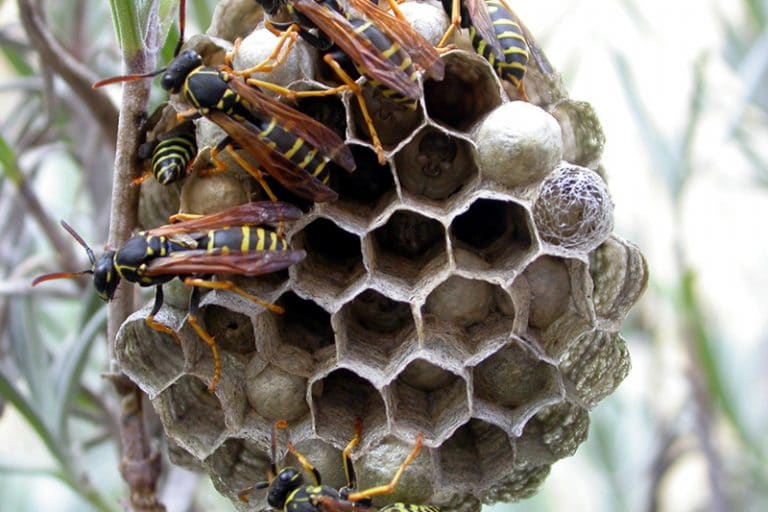
Paper wasps are the most common species we deal with in Bozeman. You can identify them by their slender bodies, long legs that dangle during flight, and brownish coloring with yellow or reddish markings. Their nests are distinctive, open, umbrella-shaped structures with visible hexagonal cells, often found hanging from eaves, porch ceilings, window frames, and door overhangs.
Paper wasps are generally less aggressive than other species, but don’t let that fool you. They will defend their nest if they feel threatened, and their stings are painful. A single paper wasp nest can house anywhere from a dozen to over a hundred wasps by late summer.
Yellowjackets
Yellowjackets are the troublemakers of the wasp world. These stocky, bright yellow-and-black insects are highly aggressive and responsible for most wasp stings in our region. Unlike paper wasps, yellowjackets often build enclosed nests in concealed locations, underground burrows, inside wall voids, attics, and dense shrubs.
What makes yellowjackets particularly dangerous is their colony size. A mature yellowjacket nest can contain thousands of workers. They’re also scavengers, which means they’ll show up uninvited at outdoor meals, garbage cans, and anywhere food is present. Disturbing a yellowjacket nest accidentally, say, while mowing over a ground nest, can result in dozens of stings in seconds.
Bald-Faced Hornets
Even though their name, bald-faced hornets are actually a type of yellowjacket. They’re larger than typical yellowjackets, with distinctive white markings on their faces and bodies. Their nests are impressive and unmistakable: large, enclosed, gray paper structures that can grow to the size of a basketball or larger, typically hanging from tree branches, shrubs, or building overhangs.
Bald-faced hornets are extremely territorial and aggressive. They can sting multiple times and will pursue perceived threats for significant distances. We strongly advise against approaching a bald-faced hornet nest without professional assistance. These are not wasps you want to antagonize.
The Dangers of DIY Wasp Nest Removal
We get it, the temptation to grab a can of wasp spray and handle things yourself is real. But DIY wasp nest removal carries significant risks that most homeowners underestimate.
First, there’s the obvious danger: getting stung. A single wasp sting is painful: multiple stings can be medically serious. For individuals with allergies, even one sting can trigger anaphylaxis, a life-threatening reaction requiring immediate emergency care. The problem is, you might not know you’re allergic until you’re stung. Allergies can also develop over time, meaning a previous sting without incident doesn’t guarantee future safety.
Then there’s the issue of incomplete removal. Over-the-counter sprays might kill the wasps you can see, but nests often extend deeper than they appear. If the queen survives, and she’s usually protected deep within the nest, the colony can rebuild. We’ve responded to countless calls from homeowners who sprayed a nest, thought the problem was solved, and found themselves dealing with an even angrier colony days later.
Location matters too. Nests in wall cavities, attics, or underground present unique challenges. Spraying pesticides into wall voids can contaminate your living space and drive wasps deeper into your home rather than eliminating them. Underground nests are notoriously difficult to treat effectively without professional equipment.
There’s also the question of timing. Attempting removal during the day when wasps are active dramatically increases your chances of being stung. And let’s be honest, climbing a ladder while wielding wasp spray and trying to avoid angry insects isn’t exactly a recipe for safety.
Finally, many store-bought products contain harsh chemicals that can pose risks to children, pets, and beneficial insects like bees. At Best Pest Control, we offer eco-friendly and chemical-free pest control options that effectively eliminate wasps without introducing unnecessary toxins into your environment.
When to Call a Professional Pest Control Service
So when does a wasp problem warrant professional intervention? Here are the situations where we strongly recommend calling in the experts:
The nest is in a difficult location. If the nest is inside a wall, underground, in your attic, or in any spot that’s hard to access safely, professional removal is the smart choice. We have the equipment and expertise to reach these nests without putting you or your family at risk.
You’re dealing with yellowjackets or bald-faced hornets. These species are significantly more aggressive than paper wasps, and their colonies can be massive. The risk of multiple stings, and the potential for a severe reaction, makes professional removal essential.
Someone in your household has a wasp allergy. If anyone in your home has experienced allergic reactions to wasp stings, don’t take chances. Professional pest control ensures the nest is completely eliminated while keeping allergic individuals safe.
The nest is large or well-established. Small nests caught early in spring might seem manageable, but by mid-summer, colonies have grown substantially. A nest the size of a golf ball in May could be the size of a football by August. Larger nests mean more wasps, more stings, and greater difficulty removing them completely.
You’ve already tried DIY methods without success. If you’ve sprayed a nest and the wasps keep coming back, it’s time to call professionals. Persistent problems usually indicate incomplete removal or multiple nests on the property.
You’re not sure what you’re dealing with. Different species require different approaches. Our technicians can accurately identify the wasp species, locate all nests on your property (there’s often more than one), and carry out the most effective treatment plan.
At Best Pest Control, we’ve been serving Montana families since 1998. We’re fully licensed, insured, and offer a service guarantee. When you call us about a wasp problem, we’ll inspect your property thoroughly and provide the right remedy to protect your family.
What to Expect During Professional Wasp Removal
If you’ve never hired a pest control service for wasps before, you might be wondering what the process actually looks like. Here’s what happens when you call Best Pest Control for wasp nest removal in Bozeman.
Initial inspection. Our technician will conduct a thorough inspection of your property to locate all wasp nests and identify the species involved. We check common nesting sites, eaves, soffits, attics, crawl spaces, sheds, trees, shrubs, and ground areas. Often, homeowners are aware of one nest but don’t realize there are others nearby.
Treatment plan. Based on our findings, we’ll recommend the best treatment approach for your specific situation. This might include direct nest treatment, perimeter applications, or a combination of methods. We’ll explain everything clearly and answer any questions you have before proceeding.
Safe removal. Our technicians use professional-grade products and protective equipment to remove nests safely. We typically perform treatments during early morning or evening hours when wasps are less active and more likely to be in the nest. This timing maximizes effectiveness and minimizes the chance of wasps escaping treatment.
Nest removal. After treatment, we’ll remove the physical nest structure when accessible. This prevents other insects from moving in and eliminates any attractants that might draw wasps back to the same spot.
Follow-up recommendations. We’ll provide guidance on preventing future infestations and let you know if follow-up treatments might be necessary. For particularly stubborn or large infestations, multiple visits may be required to ensure complete elimination.
The entire process is designed to be as minimally disruptive as possible while delivering lasting results. Most residential wasp treatments can be completed in a single visit, though we always recommend a follow-up inspection to confirm the problem has been fully resolved.
Preventing Future Wasp Infestations Around Your Home
Once we’ve eliminated your current wasp problem, the next step is making sure they don’t come back. Prevention is always easier than dealing with an established nest. Here are practical steps you can take to make your property less attractive to wasps.
Seal entry points. Inspect your home’s exterior for gaps, cracks, and openings that wasps could use to access wall voids or attics. Pay special attention to areas around windows, doors, vents, and where utility lines enter your home. Caulk small gaps and use hardware cloth or foam to seal larger openings.
Eliminate food sources. Keep outdoor garbage cans tightly sealed. Clean up food and drink spills promptly after outdoor meals. Avoid leaving pet food outside, and pick up fallen fruit from trees. The less food available, the less appealing your property becomes.
Maintain your landscape. Trim shrubs and trees regularly to reduce potential nesting sites. Clear away leaf litter, wood piles, and debris where wasps might build ground nests. Keep grass mowed to discourage yellowjackets from nesting underground.
Remove old nests. Even empty wasp nests can attract new queens looking for a place to start a colony. Remove old nests from your property during winter when they’re abandoned.
Address other pest problems. Wasps feed on other insects, so controlling general pest populations around your home can reduce wasp activity. Spiders, flies, and caterpillars are all wasp prey, fewer of these means less wasp interest in your property.
Consider preventive treatments. At Best Pest Control, we offer ongoing treatment plans to help repel wasps and other pests before they become problems. Regular preventive applications create a barrier that discourages wasps from nesting on your property in the first place.
Act early in the season. Spring is when queen wasps emerge from hibernation and start building new colonies. Catching and eliminating small nests early, before they grow, is far easier than dealing with large colonies in late summer. Keep an eye on common nesting areas starting in April and May.
Conclusion
Dealing with wasps in Bozeman doesn’t have to mean putting yourself or your family at risk. While these stinging insects are a common part of Montana summers, their nests don’t belong on your property, especially near areas where you and your loved ones spend time.
The key takeaways? Know what you’re dealing with, understand the real risks of DIY removal, and don’t hesitate to call for professional help when the situation warrants it. A wasp sting is painful. Multiple stings can be dangerous. And for those with allergies, the stakes are even higher.
At Best Pest Control, we’ve been protecting Montana homes and families since 1998. We’re a local, family-owned company with decades of experience handling the pests that thrive in our unique climate, including every wasp species you’ll encounter in the Gallatin Valley. Whether you’ve discovered a small paper wasp nest under your porch or you’re dealing with an aggressive yellowjacket colony in your wall, we have the expertise and equipment to handle it safely.
If you find a nest on your property, give us a call. We’ll inspect the situation, identify the species, and provide the right remedy to protect your family. Because when it comes to wasp pest control in Bozeman, safe nest removal isn’t just about getting rid of the insects, it’s about keeping everyone safe in the process.